Table of Contents
Prelude to the Conflict
After the dissolution of the Soviet Union (USSR) in 1991, Ukraine and Russia maintained close ties. Ukraine agreed to accede to the Treaty on the Non-Proliferation of Nuclear Weapons as a non-nuclear-weapon state in 1994, with former Soviet nuclear weapons in Ukraine being removed and dismantled. In return, Russia, the United Kingdom, and the United States agreed to uphold the territorial integrity and political independence of Ukraine through the Budapest Memorandum on Security Assurances. However, in the years following the USSR's dissolution, several former Eastern Bloc countries joined NATO, partly in response to regional security threats involving Russia, leading to increased tensions.
Early Signs of Discontent: The Orange Revolution
The 2004 Ukrainian presidential election was controversial and marked by allegations of vote rigging. Opposition candidate Viktor Yushchenko, who was poisoned during the election campaign, accused Russia of involvement. Prime Minister Viktor Yanukovych was initially declared the winner, but the result was challenged by large peaceful protests known as the Orange Revolution. After the Supreme Court of Ukraine annulled the initial result due to widespread electoral fraud, a second round re-run was held, bringing Yushchenko and Yulia Tymoshenko to power. Russia viewed these "colour revolutions" as attempts by the US and European states to destabilise neighbouring countries and undermine Russia's national security.
The Onset of Conflict: Euromaidan and the Annexation of Crimea
In early 2014, the Euromaidan protests led to the Revolution of Dignity and the ousting of Ukraine's pro-Russian president Viktor Yanukovych. This was soon followed by pro-Russian unrest in eastern and southern Ukraine. At the same time, unmarked Russian troops moved into Ukraine's Crimea and took over government buildings, strategic sites, and infrastructure. Russia annexed Crimea after a highly-disputed referendum, marking the beginning of the Russo-Ukrainian War. This war escalated when armed pro-Russian separatists seized government buildings in Ukraine's eastern Donbas region, proclaiming the Donetsk People's Republic and Luhansk People's Republic as independent states. Russia provided considerable covert support to these separatists, but denied involvement.
Ongoing Conflict and International Response
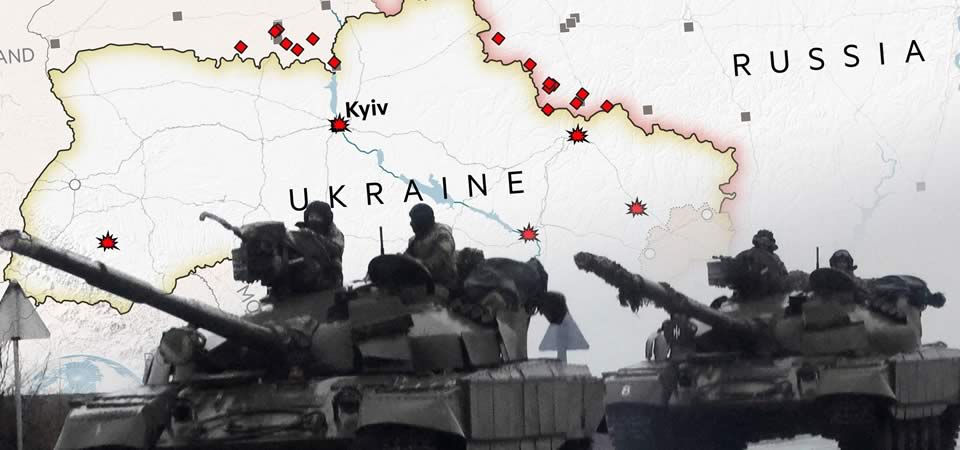
Despite the signing of the Minsk II agreements in February 2015 to end the conflict, the agreements were never fully implemented. The conflict settled into a violent but static phase, with many brief ceasefires but no lasting peace. In 2021, Russia built up a large military presence near its border with Ukraine, culminating in a full-scale invasion in February 2022. This invasion was internationally condemned, and many countries imposed sanctions against Russia. The war has resulted in a refugee crisis and tens of thousands of deaths.