Table of Contents
Introduction
The topic of military equipment left behind in conflict zones has been an issue of ongoing debate. The two most notable instances of this happening in recent history involve the United States in Vietnam and Afghanistan. Both withdrawals saw a significant amount of military equipment left behind, which were subsequently seized by local forces or fell into the hands of opposing factions.
The Legacy of the Vietnam War
Abandoned Equipment
The United States left behind a substantial amount of military equipment in Vietnam following its withdrawal in 1973. As per the Paris peace accords, the U.S. withdrew its last combat troops, leaving behind an estimated $5 billion worth of military equipment. The equipment, including everything from F-5 fighter jets, UH-1 "Huey" helicopters, M48 tanks, and M113 armored personnel carriers, were captured by the Vietnamese People's Army, with some items even finding their way to the USSR for study. At the time, The New York Times estimated that the hardware, much of it serviceable, had a collective value of $2 billion. This figure would be approximately $9.6 billion in 2020 dollars.
The Afghan Withdrawal
Massive Equipment Losses
The recent withdrawal of the U.S. from Afghanistan also resulted in a significant amount of military equipment being left behind. According to a report from the U.S. Department of Defense, approximately $7 billion worth of military equipment that the U.S. transferred to the Afghan government over the course of 16 years was left behind in Afghanistan after the U.S. completed its withdrawal in August 2021.
Details of the Left Behind Equipment
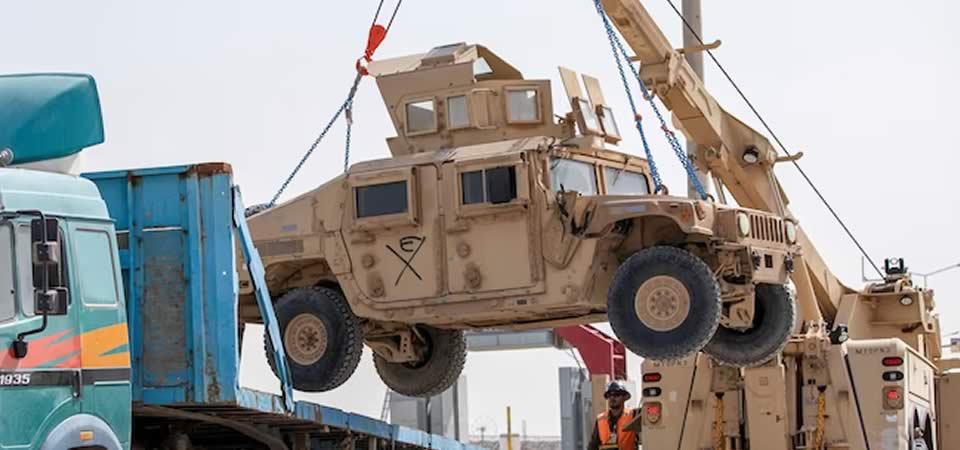
The equipment left behind included aircraft, air-to-ground munitions, military vehicles, weapons, communications equipment, and other materials. Among these, aircraft worth $923.3 million, 9,524 air-to-ground munitions valued at $6.54 million, and over 40,000 military vehicles, including 12,000 military Humvees, remained in Afghanistan at the conclusion of the U.S. military withdrawal.
Equipment Requiring Specialized Maintenance
Interestingly, much of the remaining equipment in Afghanistan requires specialized maintenance, which was previously provided by DoD contractors. This poses a challenge for the Taliban, who now control the equipment but may not have the technical knowledge and support necessary to maintain it.
Conclusion
Military equipment left behind in conflict zones can have significant geopolitical implications. The equipment abandoned in Vietnam and Afghanistan has not only had a high monetary value but also the potential to shift power balances in these regions. As the world continues to grapple with the consequences of these actions, it becomes clear that managing the withdrawal from conflict zones requires careful consideration of many factors, including the disposition of military equipment.