Table of Contents
Browning A5 History
The Browning A5 shotgun, designed by the legendary John Browning, stands as a testament to innovation and dependability in the world of firearms. This article delves into the rich history of the A5, a pioneering semi-automatic shotgun that has left an indelible mark on the firearms industry.
Origins (Late 19th Century - 1902): John Browning, renowned for his firearm designs, including the Winchester Model 1887 lever-action shotgun, conceived the Auto-5 in the late 19th century. Browning's ingenious invention aimed to offer a revolutionary semi-automatic shotgun design. Despite initial rejection by Winchester, Browning found a willing partner in FN in Belgium, where production began in 1902.
Early Developments (1902 - 1923): The A5 utilized a long recoil system, a groundbreaking feature where both the bolt and barrel moved to the rear after firing. FN standardized engraving options, and by 1909, six grades of Auto-5s were available. In 1923, Browning's contract with Remington expired, leading to FN exporting Auto-5s to Browning once again.
Evolution and Variations (1923 - 1978): The Auto-5 underwent several variations, including the Sweet Sixteen and Trap models. Different gauges were introduced, expanding the shotgun's versatility. In 1932, Browning responded to shot capacity regulations with the introduction of the 3-Shot Automatic. Production faced interruptions during World War II but resumed post-liberation. FN continued to actively produce Auto-5s until 1978.

Global Milestones (1935 - 1976): The A5 achieved significant milestones, such as the introduction of the Browning Skeet Model in 1935 and the Sweet Sixteen in 1937. In 1958, Browning expanded its line to include the Light Weight 20 gauge and Magnum 12 gauge, catering to diverse shooting preferences. The 2 millionth Auto-5 was produced in 1970, a testament to its enduring popularity.
International Collaborations (1976 - 1999): In 1976, Browning entered into a contract with Miroku in Japan to produce Auto-5s, showcasing the global reach and adaptability of this iconic shotgun. Despite basic production coming to a halt in 1978, special runs, such as the Gold Classic in 1984 and the Centenary series in 1989, kept the Auto-5 in the spotlight.
The Final Tribute (1999): The venerable Auto-5 reached its conclusion in 1999 with the Auto-5 Final Tribute Limited Edition. This marked the end of 96 years of production, culminating in 1,000 specially crafted shotguns produced by Miroku. The Auto-5's legacy endures, leaving an indelible impact on the world of firearms.
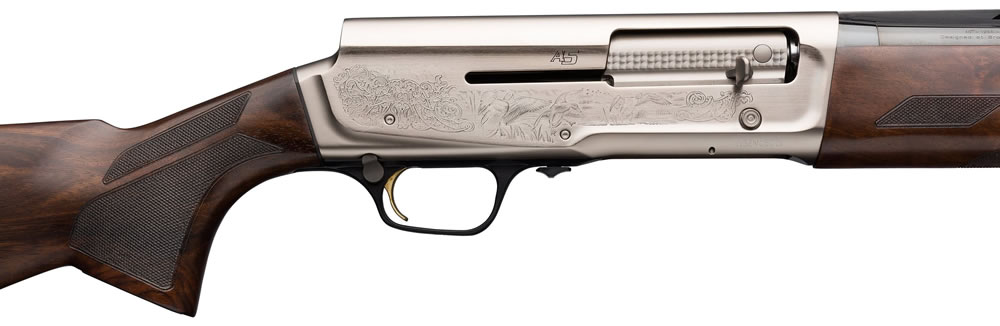
Browning A5 Main Issues: User Feedback
The Browning A5 has generated diverse opinions among users, prompting potential buyers to seek insights from those who have recently acquired this firearm.
Positive Feedback: Many users commend the A5 for its reliability, having used it extensively over multiple seasons without encountering mechanical issues. The firearm performs successfully in waterfowl and upland bird hunting, as well as at the trap range.
Cycling Concerns: A recurring issue revolves around the A5's cycling performance, particularly with lighter loads. Some users report difficulties with the bolt locking open after firing the last shell and problems with feeding and ejecting lighter loads. One user even experienced issues with the bolt attempting to close on a partially ejected shell. While some attribute these cycling issues to the break-in period, others express frustration with the A5's performance with specific types of ammunition.
Addressing Cycling Issues: Several users have successfully addressed cycling issues through deep cleaning, while others suggest potential design flaws. It's essential to note that experiences vary, and some users may not encounter these problems.
Overall Satisfaction: Despite cycling concerns, many users express overall satisfaction with the A5, emphasizing its fit, feel, and performance. The firearm's versatility for different hunting scenarios, including waterfowl, upland bird, and sporting clays activities, is acknowledged.
Considerations for Potential Buyers: Potential buyers are advised to consider the specific model of the A5, such as the 3-inch or 3.5-inch version, and gather information on its compatibility with the intended ammunition. Staying informed about any design updates or improvements made by Browning is also recommended.
User Feedback: While some users like ken starling praise the A5 as a great shooting gun with no complaints, others like OTL91 share their negative experiences, citing it as the most unreliable gun they've owned. The variety of feedback emphasizes the importance of individual preferences and potential variations in manufacturing.
In conclusion, potential buyers looking to acquire the new production Browning A5, such as the standard stalker model in 3", should carefully weigh the mixed reviews. Considering specific use cases, researching ammunition compatibility, and staying informed about any updates from Browning can help make an informed purchasing decision. The experiences shared by existing users offer valuable insights into the potential strengths and limitations of the Browning A5.
Troubleshooting Browning A5 Wicked Wing: Common Issues and Solutions
The user recounts a sudden malfunction during a dove hunt in South Texas, where the shotgun went from functioning normally to repeatedly failing to fire. The issue seemed to be a "trigger pull and click" without a shot being fired.
Potential Causes and Solutions:
-
Firing Pin Issues: Some users speculated that the problem could be related to the firing pin. One user suggested checking the firing pin's condition by verifying its visibility when the bolt is held back. Another user mentioned the possibility of a broken firing pin, a relatively common issue in newer guns.
-
Ammo Considerations: The discussion expanded to consider the ammunition used. Questions were raised about the condition of unfired shells, whether they were handloads, and if the shells had been exposed to moisture. These factors can sometimes affect the firing mechanism.
-
DIY Inspection: Several members advised the user to perform a detailed inspection of the shotgun. This involved disassembling the gun, inspecting the firing pin for damage or obstruction, and cleaning the firearm thoroughly. The trigger assembly was also suggested to be checked for broken or damaged springs.
-
Dirt Accumulation: A straightforward explanation offered by a member was the accumulation of dirt. The suggestion was that sufficient dirt or debris could hinder the proper cycling of the firing pin, leading to misfires. An anecdote about a similar incident during a goose hunt emphasized the importance of keeping the firearm clean.
While the Browning A5 Wicked Wing is generally praised for its simplicity and reliability, users may encounter issues, as demonstrated by the user's experience. The suggested solutions range from checking the firing pin and inspecting ammunition to a thorough DIY inspection and addressing potential dirt accumulation. As with any mechanical device, periodic maintenance and attention to detail can contribute to a trouble-free shooting experience. Users experiencing similar problems are encouraged to consult with a gunsmith for professional assistance and to share their experiences within the shooting community.
Browning A5 Cleaning
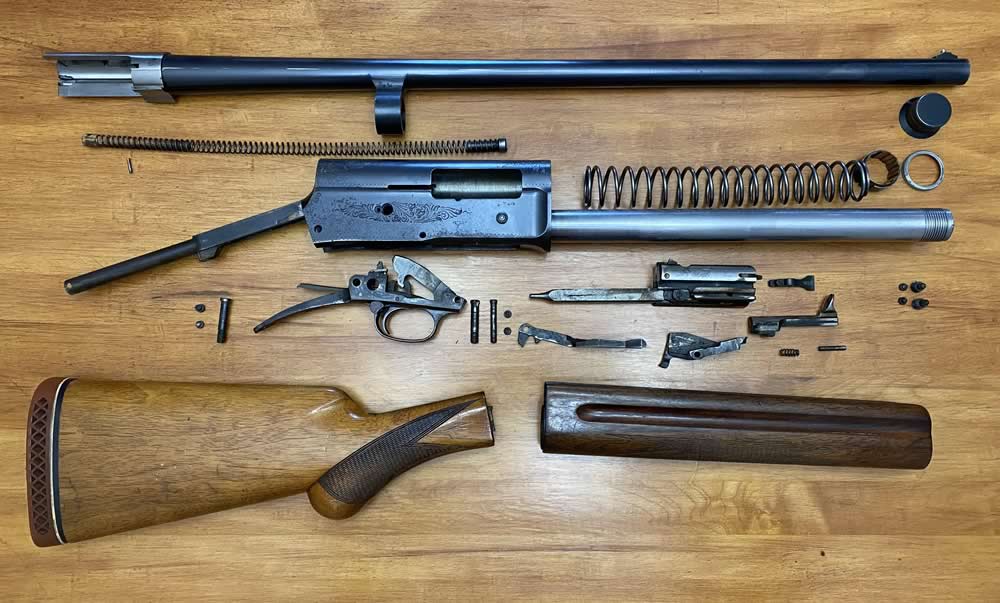
Field Stripping:
- Lay out a cleaning mat and ensure the firearm is unloaded.
- Stand the shotgun vertically, pull the barrel down carefully, and unscrew the magazine cap.
- Remove the forearm and barrel, capturing a picture of the setup for reference.
- Depress the carrier latch button, ease the bolt forward, and the firearm is now field stripped.
Proper Care:
- Barrel Extension: Apply a light coat of CLP inside and outside the barrel extension for smooth operation.
- Magazine Tube: Clean and dry the magazine tube, then apply a light coat of CLP. Do this before and after each hunting season.
- Clean the Bore: Use a bore snake to clean out debris and fouling.
- Friction Rings: Set up the friction rings according to your shotgun model to adjust for different loads.
Reassembly:
- Reassemble in reverse order, ensuring the barrel extension aligns in the receiver.
- Hand-tighten the magazine cap until the forearm doesn't move, ensuring proper tension.
Longevity:
- Parts Replacement: After nearly 120 years, worn parts may need replacement, especially if the shotgun is heavily used.
- Forearm Inspection: Check for cracks in the forearm and address them early to prevent issues.
- Barrel Extension: Regularly check for a visible sliver of the barrel extension through the ejection port to avoid potential damage.
In the Field:
While the A-5 requires more preseason and postseason care than newer guns, the joy of using a classic shotgun like the Sweet Sixteen in the grouse woods or duck blinds makes it worthwhile.
Remember, keeping an eye on details like the barrel extension and addressing issues promptly will ensure your Browning Auto 5 remains a reliable companion in the field.
Browning A5 Serial Number Lookup
| Automatic Five (A-5) | ||
Year |
Code |
Notes |
| 1954 | H | Standard Weight |
| L | Light Weight | |
| 1956 | M | Standard Weight |
| G | Light Weight | |
| 1958 | M | Standard Weight |
| G | Light Weight | |
| V | 12 Gauge Magnum | |
| S | Sweet Sixteen | |
| Z | Light 20 Gauge | |
| X | 20 Gauge | |
| X | 20 Gauge Magnum | |
| 1969 | 1501 | Magnum 12 Gauge |
| 2101 | Light 12 Gauge | |
| 2201 | Sweet 16 | |
| 1601 | Magnum 20 Gauge | |
| 2301 | Light 20 Gauge | |
| 1975 | 151 | Magnum 12 Gauge |
| 211 | Light 12 Gauge | |
| 221 | Sweet 16 | |
| 161 | Magnum 20 | |
| 231 | Light 20 | |
Automatic Five (A-5) |
|||
Year |
Start |
End |
|
1924 |
3000 |
18000 |
|
1925 |
18001 |
33000 |
|
1926 |
33001 |
48000 |
|
1927 |
48001 |
63000 |
|
1928 |
63001 |
78000 |
|
1929 |
78001 |
93000 |
|
1930 |
93001 |
108000 |
|
1931 |
108001 |
123000 |
|
1932 |
123001 |
138000 |
|
1933 |
138001 |
153000 |
|
1934 |
153001 |
168000 |
|
1935 |
168001 |
183000 |
|
1936 |
183001 |
198000 |
|
1937 |
198001 |
213000 |
|
1938 |
213001 |
228000 |
|
1939 |
228001 |
229000 |
|
1940-1946 |
WWII no commercial F.N. production |
||
1946-1951 |
Approximately 45,000 shotguns produced by Remington in
the U.S. |
||
1946 |
229000 |
237000 |
|
1947 |
237001 |
249000 |
|
1948 |
249001 |
270000 |
|
1949 |
270001 |
285000 |
|
1950 |
285001 |
315000 |
|
1951 |
315001 |
346000 |
|
1952 |
F.N. A-5 Production resumes |
||
1952 |
346001 |
387000 |
|
1953 |
387001 |
438000 |
|
1954 |
H = Standard Wgt. |
||
1954 & 55 |
H39000 |
H83000 |
|
L42000 |
L83000 |
||
1956 |
M = Standard Wgt. G = Lightweight |
||
1956 |
H83000 |
H99000 |
|
G1 |
G23000 |
||
1957 |
M22000 |
M85000 |
|
G23000 |
G85000 |
||
1958 |
G85001 |
G99000 |
|
8G1 |
8G28000 |
||
1958 - |
See Post 1958 Dating System. |
||
1961 - 1974 |
2,000,000 to 2,002,500 |
Two Millionth A-5 Commemoratives |
|
Browning A5 Gas vs. Inertia Driven
-
Cleaning Concerns:
- The initial query centered around the observation of a friend's Beretta auto loader getting notably dirty. While some users argued that gas guns, in general, tend to accumulate more residue, others countered that cleaning should not be a significant factor in choosing a shotgun.
- The cleaning process for gas-operated autoloaders involves wiping down the mag tube and addressing typical maintenance tasks. On the other hand, inertia-driven guns were praised for their simplicity and ease of cleaning, with some users emphasizing the importance of regular cleaning regardless of the operating system.
-
Recoil:
- The discussion also touched upon recoil, with users noting that gas guns typically have less felt recoil compared to inertia-driven counterparts. The reduced recoil in gas-operated shotguns was considered a significant advantage, especially for those who prioritize comfort during extended shooting sessions.
-
Reliability:
- Some users argued that gas guns might be more prone to jams, emphasizing that the reliability of a shotgun is crucial in hunting situations where a second chance might not be readily available.
- In contrast, supporters of inertia-driven systems highlighted their simplicity and reliability, with certain models being praised for their ability to function smoothly with minimal cleaning.
-
Load Versatility:
- Gas-operated shotguns, particularly newer designs from Beretta and Browning, were acknowledged for their improved load versatility, capable of cycling a range of shell types from light 2 ¾" to heavy 3 ½" loads.
- Inertia-driven guns were recognized for their increased load versatility compared to the older long recoil design but were deemed not as versatile as certain gas-operated models.
-
Specific Models:
- Users shared their experiences with various shotguns, including the Browning Auto-5, Benelli SuperSport, Beretta Xtrema2, and others. Preferences varied based on personal shooting habits, preferences, and the intended use of the shotgun.